↑ Botanical Source
Chemical Compounds
↓ System Profiles
Traditional Usage
Used for cold patterns affecting the spleen and stomach (abdominal pain, cold limbs, diarrhea), yang collapse with cold limbs and weak pulse, and cold phlegm in the lungs with wheezing.
Functions
Warms the middle and dispels cold, restores devastated yang, warms the lungs and resolves phlegm dampness. Stronger warming effect than fresh ginger.
Indications
- Spleen/stomach cold
- Abdominal pain and cold
- Vomiting and diarrhea
- Yang collapse
- Cold phlegm wheezing
Modern Research
Research shows gingerols and shogaols have anti-inflammatory, antioxidant, and antiemetic effects. Dried ginger has higher concentrations of shogaols compared to fresh ginger, which may explain its stronger warming properties.
Contraindications
Contraindicated in yin deficiency with heat signs, bleeding disorders, and pregnancy (use with caution).
Incompatibilities
None specifically noted in classical texts
Dosage
3-10g decocted. For rescue from yang collapse, up to 30g may be used.
Classical Reference
味辛溫。主胸滿咳逆上氣,溫中,止血,出汗,逐風濕痹,腸澼下利。
乾薑生用,能助陽退熱,溫中散寒。
Dosage Effects
Comparison Notes
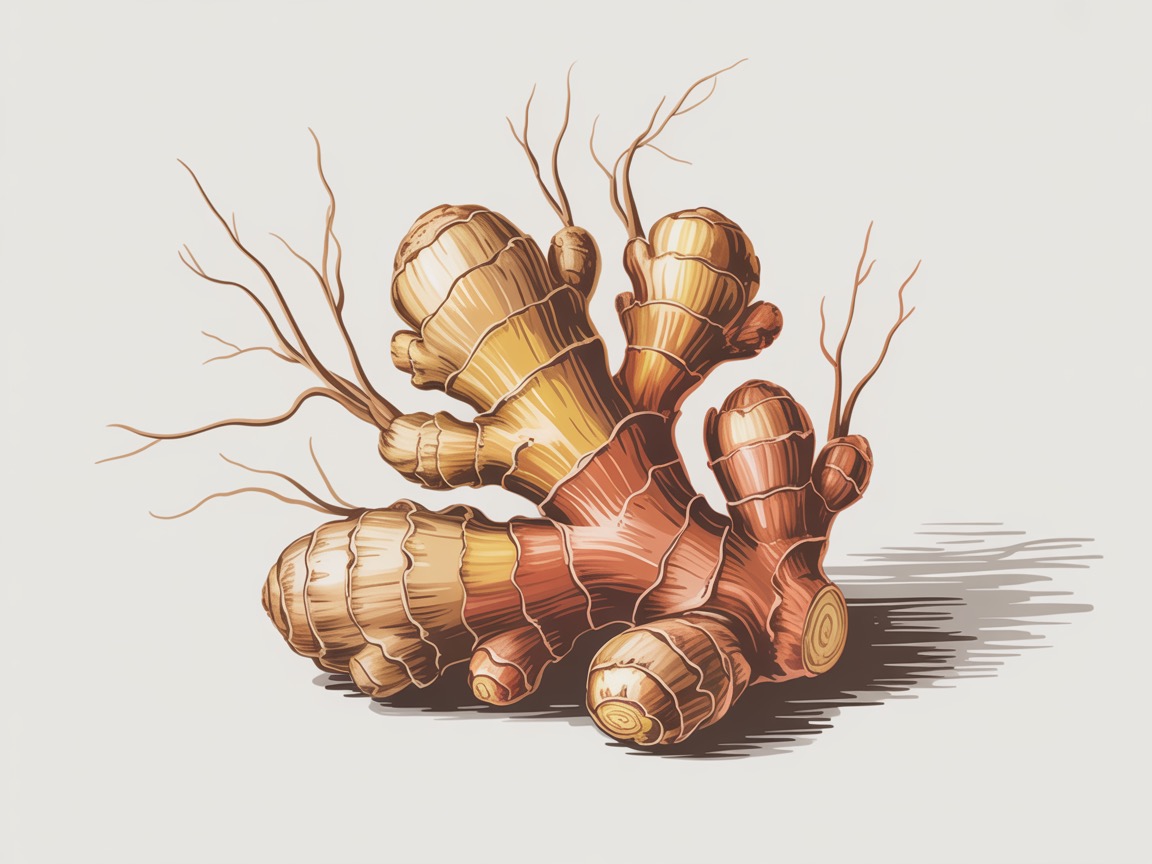
Compared to fresh ginger (生薑): Dried ginger is hotter and more drying, better for internal cold and yang collapse. Fresh ginger is cooler and promotes sweating, better for exterior cold patterns.
📋 Preparation Information
🍽 Common Usage
⚠ Safety Information
Warnings
- ⚠May increase bleeding risk when combined with anticoagulant medications
- ⚠High doses may cause heartburn or gastrointestinal upset