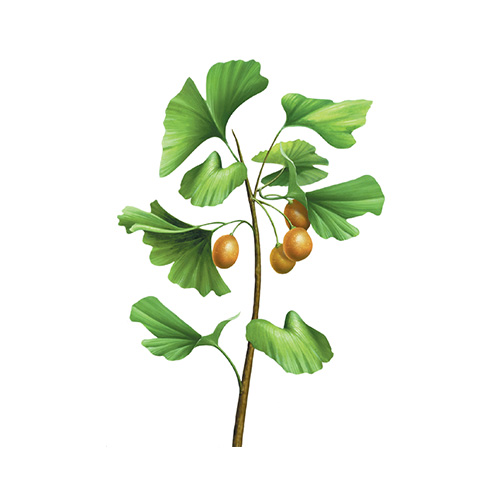
↑ Botanical Source
Chemical Compounds
↓ System Profiles
History
Ginkgo is the oldest living species of tree on earth, dating back to the Paleozoic period (more than 225 million years ago). The medicinal use of ginkgo leaf is first mentioned in Chinese medicine in the Ming dynasty in 1436. A standardised extract of ginkgo leaf is one of the most clinically tested and frequently prescribed phytomedicines in Europe, and has been one of the 10 best-selling herbal dietary supplements in the US for about six years.
Traditional Usage
Ginkgo leaf affects the lung meridian, and has sweet, bitter, astringent and neutral properties. It is primarily used to improve lung health, reduce wheezing and treat chest pain. In terms of Western medicine, it works by increasing the fluidity of the blood by inhibiting platelet aggregation, thus improving blood flow and reducing thrombosis, inflammation, allergies and bronchoconstriction. Ginkgo use results in improvement of a variety of conditions including cognition; working memory; tinnitus, short-term visual memory, attention and concentration spans and social functioning in patients with dementia; short-term memory in people with cerebral insufficiency; intermittent claudication (muscle cramps); activities of daily living (ADL) scores in people under 60 years old; and mood and sleep in older individuals.