↑ Botanical Source
Chemical Compounds
↓ System Profiles
Traditional Usage
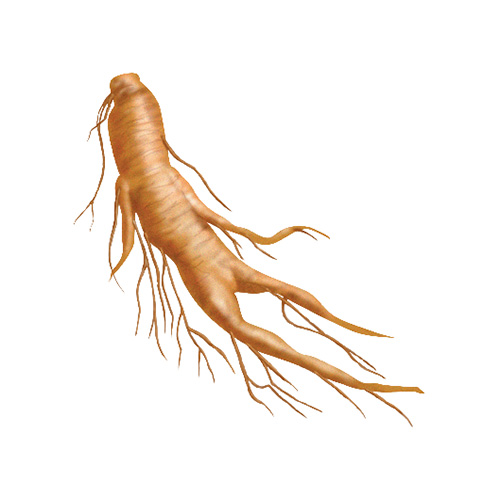
The supreme qi tonic herb. Used for severe qi deficiency, prolapse, fatigue, loss of appetite, shortness of breath, spontaneous sweating, thirst, and heart palpitations. Famous for rescuing devastated yang in emergency situations.
Functions
Powerfully tonifies primal qi, strengthens the spleen and nourishes the stomach, benefits the lung qi, generates fluids, quiets the spirit.
Indications
- Severe qi deficiency
- Collapse and shock
- Spleen qi deficiency
- Lung qi deficiency
- Spontaneous sweating
- Thirst from deficiency
- Heart palpitations
- Insomnia
Modern Research
Research shows adaptogenic effects on the central nervous system, immune modulation, anti-fatigue, cardiovascular protection, and anti-diabetic effects. Ginsenosides demonstrate diverse pharmacological activities including neuroprotection and anti-cancer properties.
Contraindications
Contraindicated in excess heat patterns, high fever, excess conditions. Avoid with veratrum (藜蘆). Use cautiously with radish (蘿蔔) which may reduce effects.
Incompatibilities
Incompatible with Veratrum (藜蘆). Antagonized by Radish (蘿蔔).
Dosage
3-9g decocted separately. For rescue from collapse: 15-30g decocted and taken as a strong brew.
Classical Reference
味甘微寒。主補五臟,安精神,定魂魄,止驚悸,除邪氣,明目,開心益智。
治男婦一切虛證,發熱自汗,眩暈頭痛,反胃吐食,痎瘧,滑瀉久痢,小便頻數,淋瀝,勞倦內傷,中風中暑,痿痹,吐血,嗽血,下血,血淋,血崩,胎前產後諸病。
Dosage Effects
Comparison Notes
Compared to American Ginseng (西洋參): Asian ginseng is warmer and more stimulating, better for qi and yang deficiency. American ginseng is cooler and more moistening, better for qi and yin deficiency with heat.
📋 Preparation Information
🍽 Common Usage
⚠ Safety Information
Warnings
- ⚠May interact with blood thinning medications
- ⚠Can cause insomnia, nervousness, or headache in sensitive individuals