→ Preparations from this Plant (3)
Botanical Description
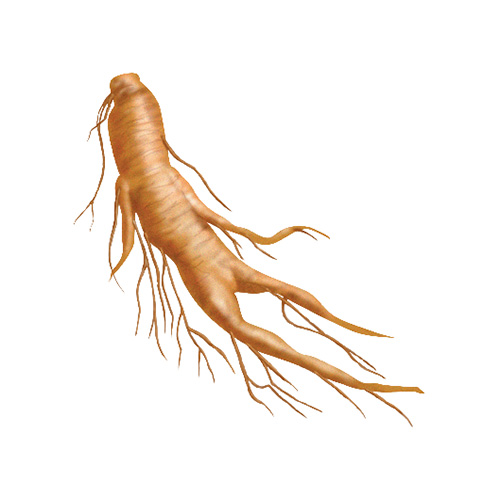
A perennial plant native to the mountains of East Asia, prized for its fleshy root which has been used in traditional medicine for thousands of years. The root typically resembles a human figure, which is reflected in its Chinese name (人蔘 - 'man root').
Taxonomic Classification
- Kingdom
- Plantae
- Phylum
- Tracheophyta
- Class
- Magnoliopsida
- Order
- Apiales
Distribution & Habitat
Origin
Northeast Asia - Korea, northeastern China (Manchuria), eastern Russia
Habitat
Cool, shady forests with well-drained, humus-rich soil. Native to Korea, northeastern China, and eastern Russia.
Geographical Distribution
Primarily cultivated in Korea, China, and Japan. Wild populations are rare due to overharvesting.
Plant Characteristics
- Growth Form
- Herb
- Lifecycle
- Perennial
⚗ Chemical Compounds
🌿 Plant Parts
🧬 DNA Barcode
⚗️ Chemical Profile
Chemical Components
1-5 %
Main bioactive compounds; includes Rb1, Rb2, Rc, Rd, Re, Rf, Rg1, Rg2, etc. Over 30 ginsenosides identified
5-15 %
Immunomodulatory polysaccharides including ginsan
Peptidoglycans with hypoglycemic activity
Various polysaccharides with immunomodulatory effects
0.05-0.5 %
Contains panaxynol, panaxydol, panaxytriol (polyacetylenes)